Spider Games - in the City of Spies
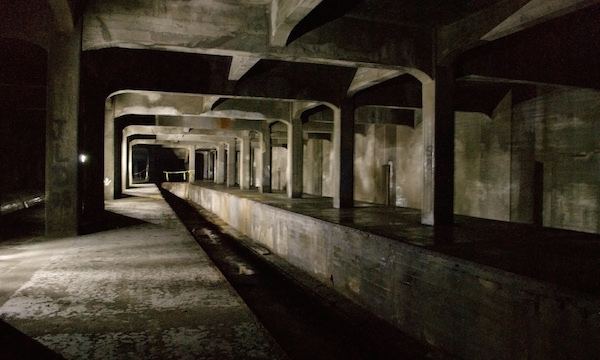
Ghost Stations
In 1953, when the city of Berlin was still divided by the Berlin
Wall, the Americans and British decided to dig a tunnel underneath the wall into the eastern Soviet side to spy on their phone calls. They finished the tunnel in 1954, only to discover that the Soviets had known about it the whole time.
It wasn’t the only tunnel beneath the Berlin Wall. By the time the wall was torn down in 1989, over 300 people had escaped from East to West Berlin using tunnels they had dug themselves.
The Soviets didn’t dig any tunnels. They didn’t need to. They had existing ones going back to World War Two and beyond — railway tunnels that had fallen into disuse. More tunnels for Hitler’s grandiose ‘Germania’ project were started but never finished. Along these derelict, deserted underground railway lines are equally derelict, deserted and decaying stations. Ghost stations.
Katipo Joe
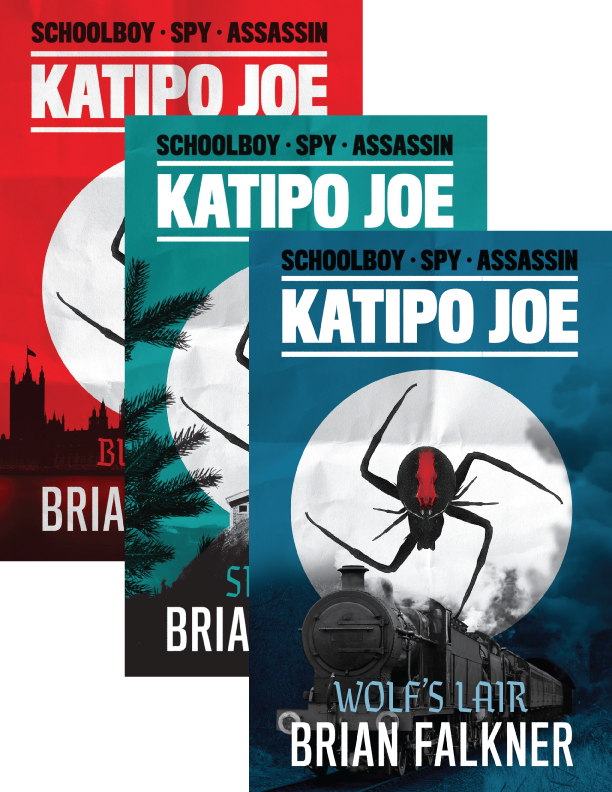
Although Spider Games takes place more than half a century after the events of the Katipo Joe novels, the two stories are bound by blood. Nick, the young man at the heart of Spider Games, is the grandson of Joseph St George — the daring World War II spy once known by his codename, Katipo Joe.
Joe’s fight was waged in the hot war of the 1940s. Nick’s unfolds in a different kind of conflict — the so-called Cold War that defined the latter half of the twentieth century.
For more information on the Katipo Joe Books, click here
The Berlin Wall
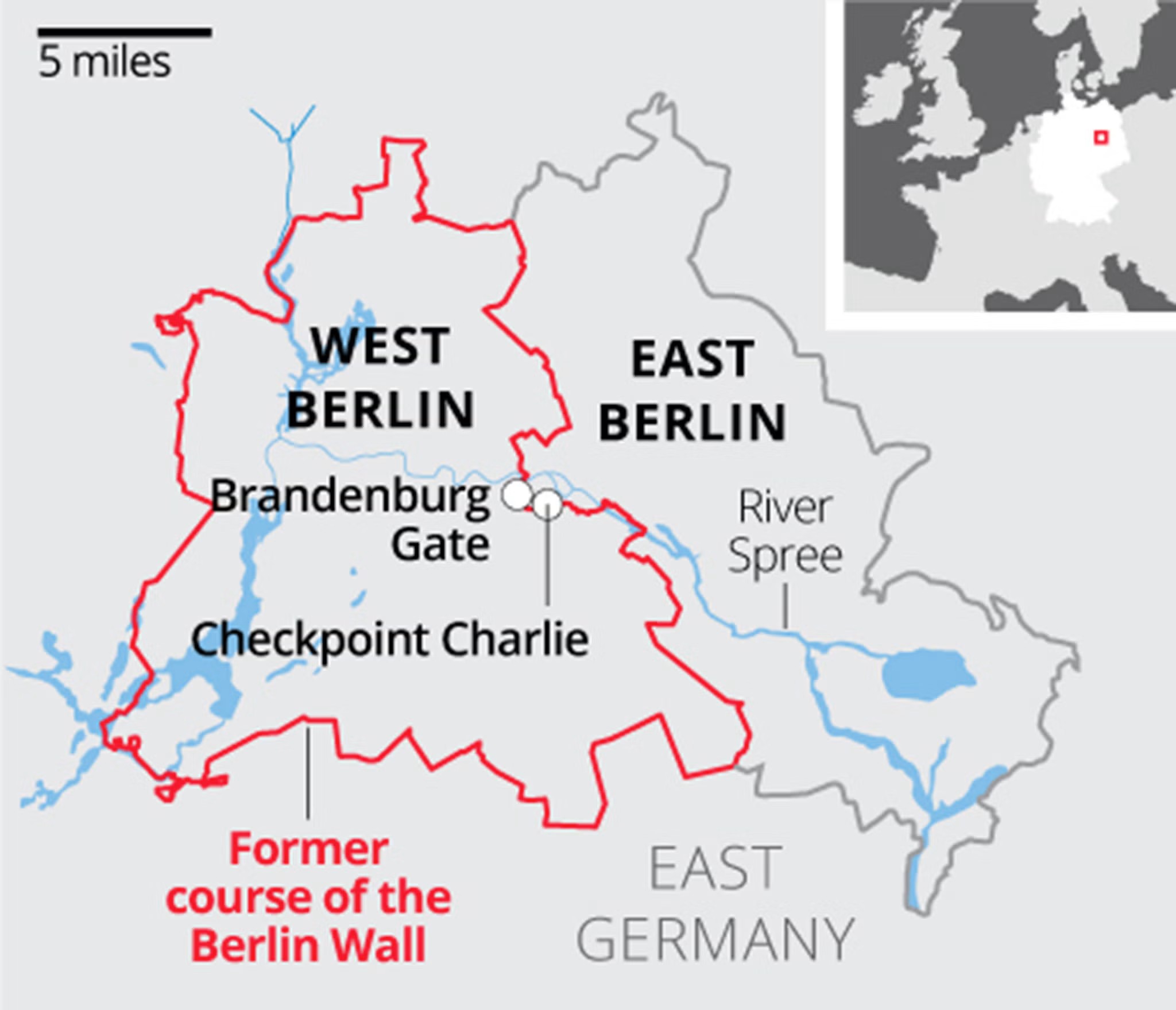
The Berlin Wall was built in August 1961 to stop East Germans fleeing to the West through Berlin. Backed by the Soviets, East Germany first rolled out barbed wire, then turned it into a concrete barrier reinforced with guard towers, patrols, and minefields. Far from being a single straight line, the Wall formed a complete ring nearly 160 kilometres long, encircling all of West Berlin and cutting across streets and neighbourhoods, dividing families overnight, and trapping an entire city inside communist territory.
For nearly three decades it stood as the defining symbol of the Cold War. Many died trying to escape, while others tunnelled, climbed, or flew over in desperate bids for freedom. Growing unrest finally toppled it in November 1989, when East German authorities opened the checkpoints and Berliners tore the Wall down, heralding both German reunification and the collapse of communist rule in Eastern Europe.
The KGB
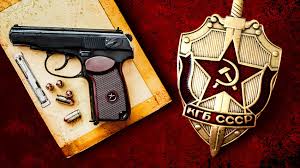
The KGB was the main security and intelligence agency of the Soviet Union from 1954 until the USSR collapsed in 1991. It combined secret police, foreign intelligence, and counter-intelligence functions, giving it immense power at home and abroad. Domestically it monitored citizens, suppressed dissent, and protected the Communist Party’s control. Internationally it spied on Western governments, recruited agents, and ran covert operations across Europe, America, and beyond.
Feared for its ruthlessness, the KGB became a symbol of Cold War intrigue. It trained spies, planted informants, and spread propaganda while waging a shadow war against services like the CIA and MI6. Even after it was dissolved, many of its methods and personnel flowed into Russia’s later security services, keeping its reputation alive long after the Soviet era.
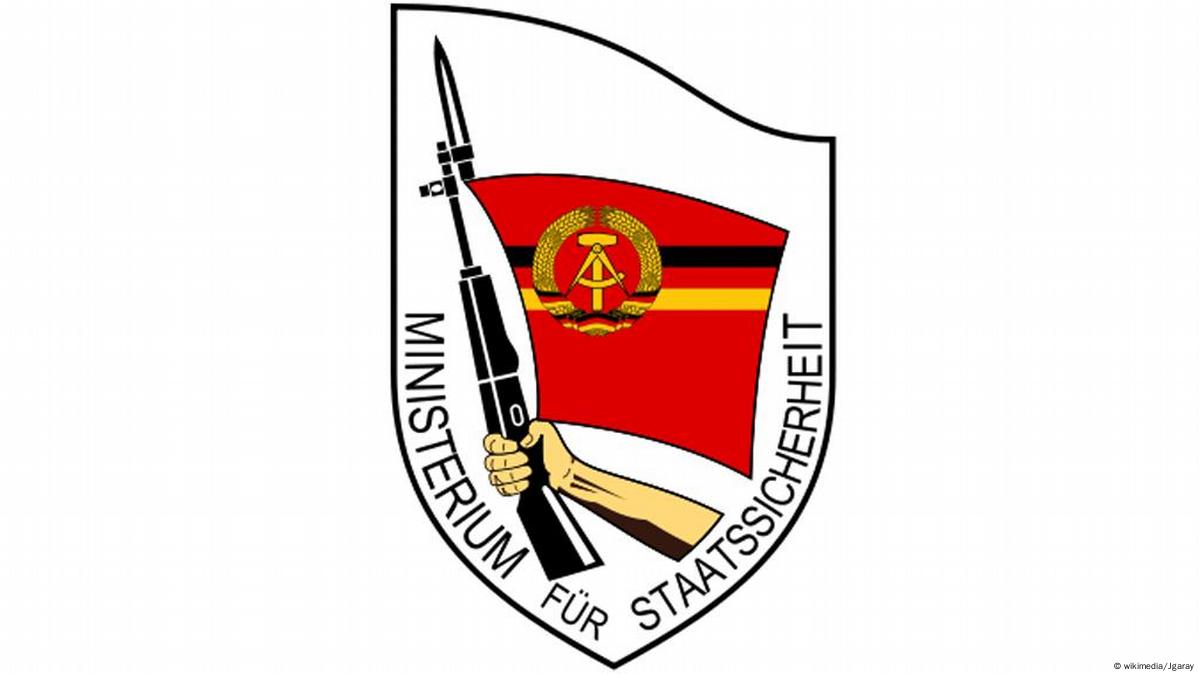
The Stasi
The Stasi, short for Ministry for State Security, was the secret police of East Germany from 1950 until the fall of the Berlin Wall in 1989. It was one of the most pervasive and feared intelligence organisations in history, employing tens of thousands of full-time officers and recruiting hundreds of thousands of informants to spy on friends, neighbours, and even family members. Its goal was to protect the ruling Socialist Unity Party by rooting out dissent and preventing opposition to communist rule.
The Stasi infiltrated every aspect of daily life, using surveillance, intimidation, and blackmail to maintain control. Citizens lived with the constant fear that anyone could be reporting on them. Files were kept on millions of East Germans, many of which revealed shocking betrayals once opened after reunification. The collapse of East Germany and the disbanding of the Stasi became a powerful symbol of the end of state repression in Eastern Europe.
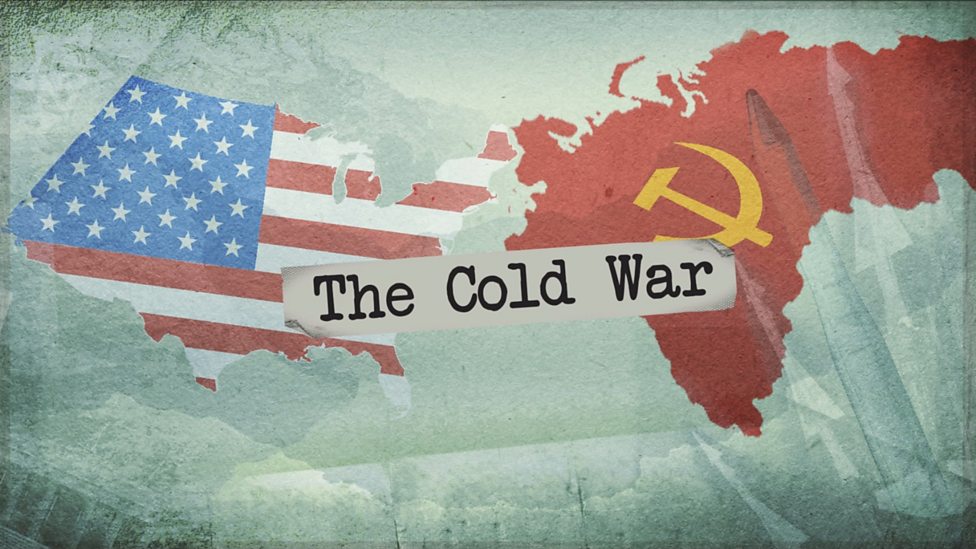
The Cold War
The Cold War was the long period of political and military tension between the United States and its allies in the West, and the Soviet Union and its communist allies in the East, lasting from the end of World War II in 1945 until the early 1990s. Unlike earlier wars, it was not fought directly on the battlefield between the two superpowers but through espionage, propaganda, arms races, and proxy wars in other countries. The division of Germany, and of Berlin in particular, became one of its most visible front lines.
The term “Cold War” was first popularised in 1947 by American journalist Walter Lippmann and was used to describe a conflict that was “cold” rather than “hot” — one of threats, suspicion, and rivalry without direct combat between the superpowers. For more than four decades it shaped world politics, daily life, and the ever-present fear that nuclear weapons might one day turn the Cold War into a very hot one.
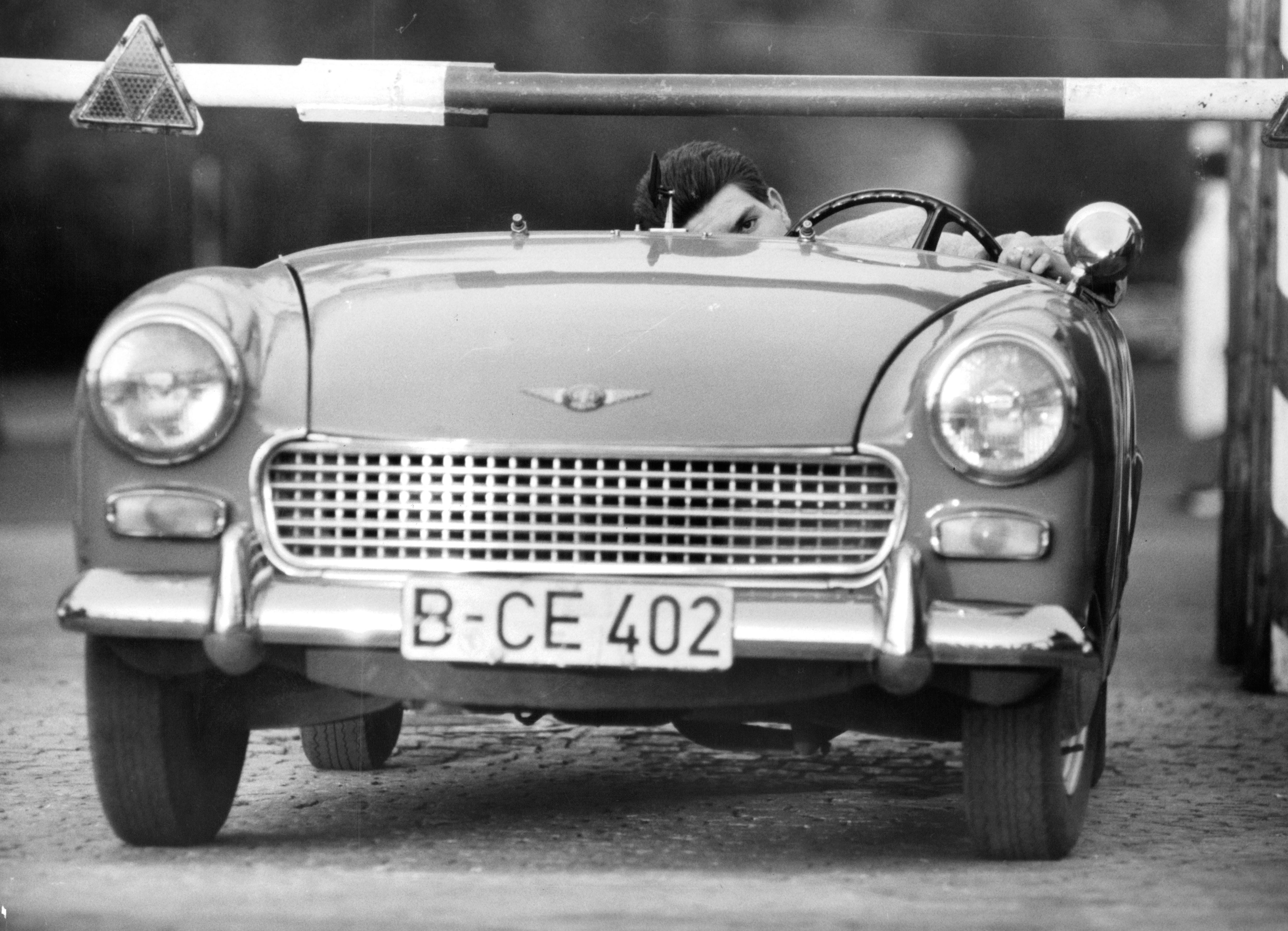
Escape to the West!
From the moment the Berlin Wall went up in 1961, people on the eastern side began plotting ways to escape. Some dug elaborate tunnels under the Wall, often starting from cellars or basements in West Berlin. Others tried bold schemes with hot-air balloons, homemade flying machines, or hiding inside cars and suitcases. Many were caught, and more than a hundred were killed, but thousands succeeded, driven by the desire for freedom and reunion with family.
The escapes became legendary for their daring. One of the most famous took place in 1963, when Heinz Meixner drove his small Austin-Healey Sprite sports car at speed under a barrier where the Wall crossed a road, scraping through to freedom before the guards could react. Tunnels, too, became well known — some were narrow crawlspaces dug by hand, while others were reinforced passages with electric lights and rail tracks for moving soil. Smugglers, students, and even television crews helped dig, and their work allowed hundreds to slip beneath the Wall to safety. These extraordinary escapes captured the world’s imagination and turned the Wall into a lasting symbol of both repression and resistance.

Chloroform
Chloroform (trichloromethane) was widely used as an anaesthetic after James Young Simpson helped popularise its clinical use in 1847. It works by depressing the central nervous system and, at sufficient concentrations, can produce unconsciousness — but onset is not instantaneous and depends on prolonged, controlled inhalation. Chloroform carries serious risks: it can suppress breathing, trigger fatal cardiac arrhythmias, and damage the liver and kidneys; long-term or high-level exposure has also been linked to cancer risk. For these reasons, and because far safer anaesthetics were developed, chloroform fell out of routine medical use during the 20th century.
Fiction often shows an immediate, harmless knockout after a single sniff from a rag — a dramatic device rather than fact. In reality chloroform’s effects are slower, unpredictable and potentially deadly, so portrayals should avoid instructional detail and make clear the real danger involved. As a historical note, chloroform belongs in the category of medical advances that later proved too risky and were replaced by safer techniques and drugs.
The Y2K Bug
The Y2K bug, or “Millennium Bug”, (or Y2K beetle as Rejhana calls it!) arose because many computer systems stored years with two digits (for example “99” for 1999). As the clock approached 1 January 2000, fears mounted that unpatched systems would treat “00” as 1900 and cause date calculations to fail. Speculation ran wild: people worried that bank accounts might be wiped, billing and payroll systems would collapse, power grids and water supplies could fail, and that aircraft might be grounded—or worse, fall from the sky—if embedded controllers misread dates.
Those fears drove an unprecedented global effort in the late 1990s: governments, businesses and programmers audited code, replaced or updated systems, and rehearsed contingency plans. Because of that work, only isolated and mostly minor incidents occurred when the millennium arrived. The episode is remembered both for the scale of the anxiety it produced and as a rare example of worldwide co-ordination that largely prevented the worst predictions from becoming reality.